CRedIBlE Co-Creation Workshop: Beyond the Blueprint, Reimagining KTU's Central Building
How do we balance the rich cultural heritage of a historic modernist landmark with the rigorous energy demands of a sustainable future?
In our first CRedIBlE stakeholder workshop, architecture students and faculty from Kaunas University of Technology (KTU) gathered in the iconic Central Building to work towards answers. The workshop began with Daniel Wuebben (Universidad Pontificia Comillas, Spain) presenting on the history of the structure, originally built in 1935 as the Lietuvos Zemes Bankas (Lithuanian Agricultural Bank). Situated at the intersection of Freedom Avenue (Laisves aleja) and Unity Square, the building forms part of the UNESCO World Heritage area "Modern Kaunas: Architecture of Optimism, 1919-1939." Wuebben reviewed its architectural anatomy and transformation from an economic and political headquarters to a center for academic life.
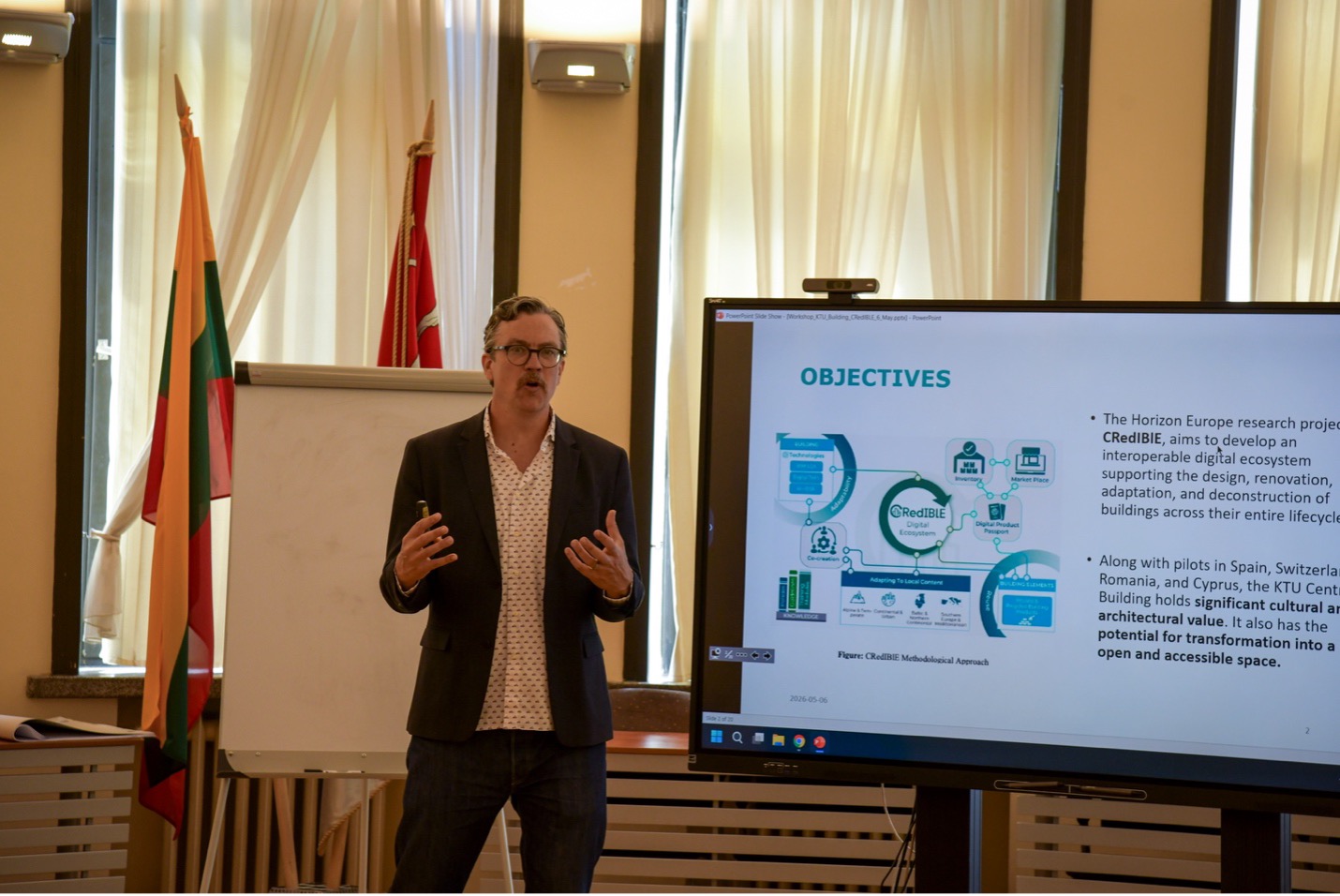
Daniel Wuebben introduced the CRedIBlE project and reviewed the history and architectural features of the KTU Central Building.
KTU professor Darius Pupeikis followed with a presentation on the Digital Twin of Kaunas and the Central Building, showcasing how data-driven 3D replicas allow us to simulate real-time performance, energy configurations, and spatial adjustments before a single brick is altered.
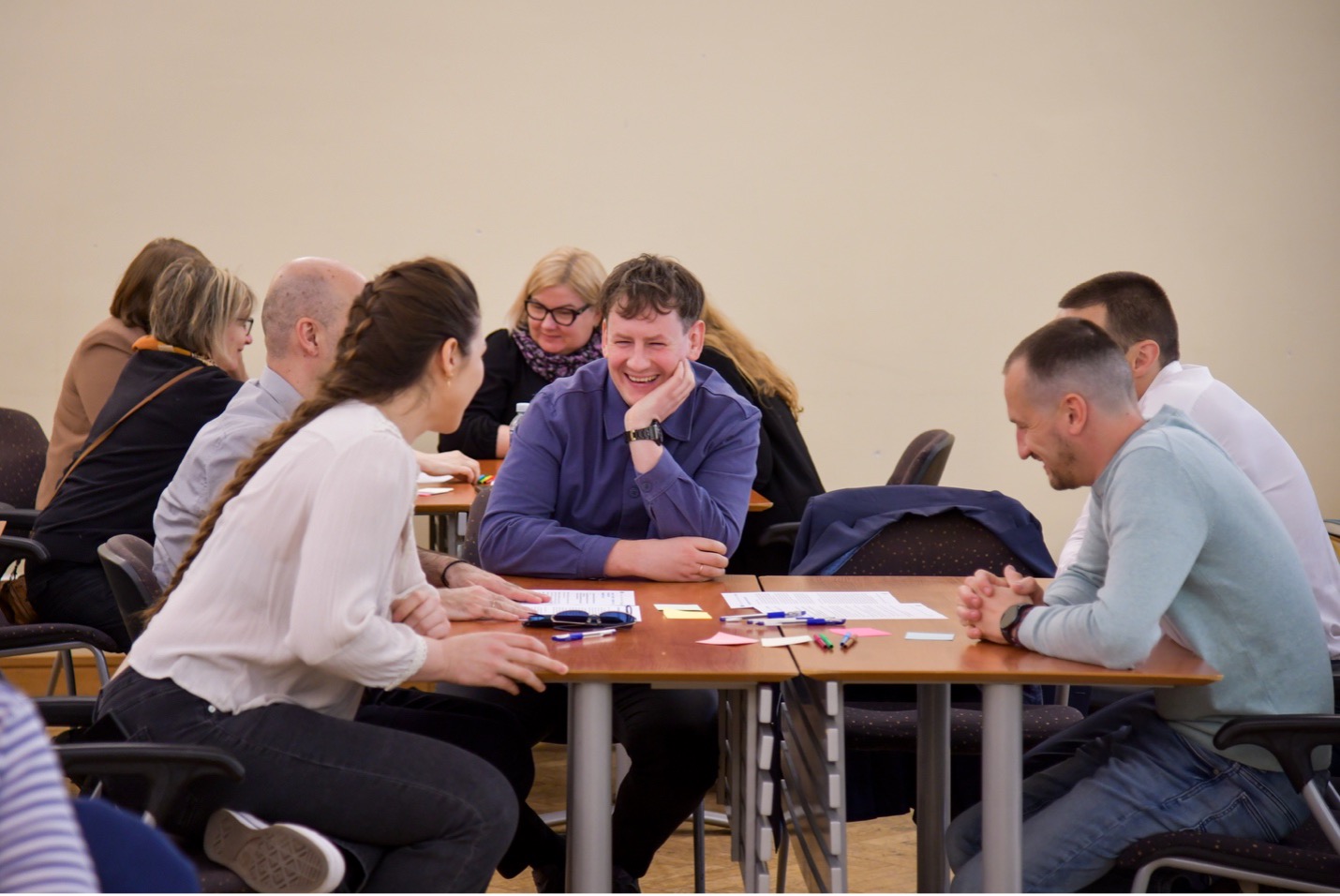
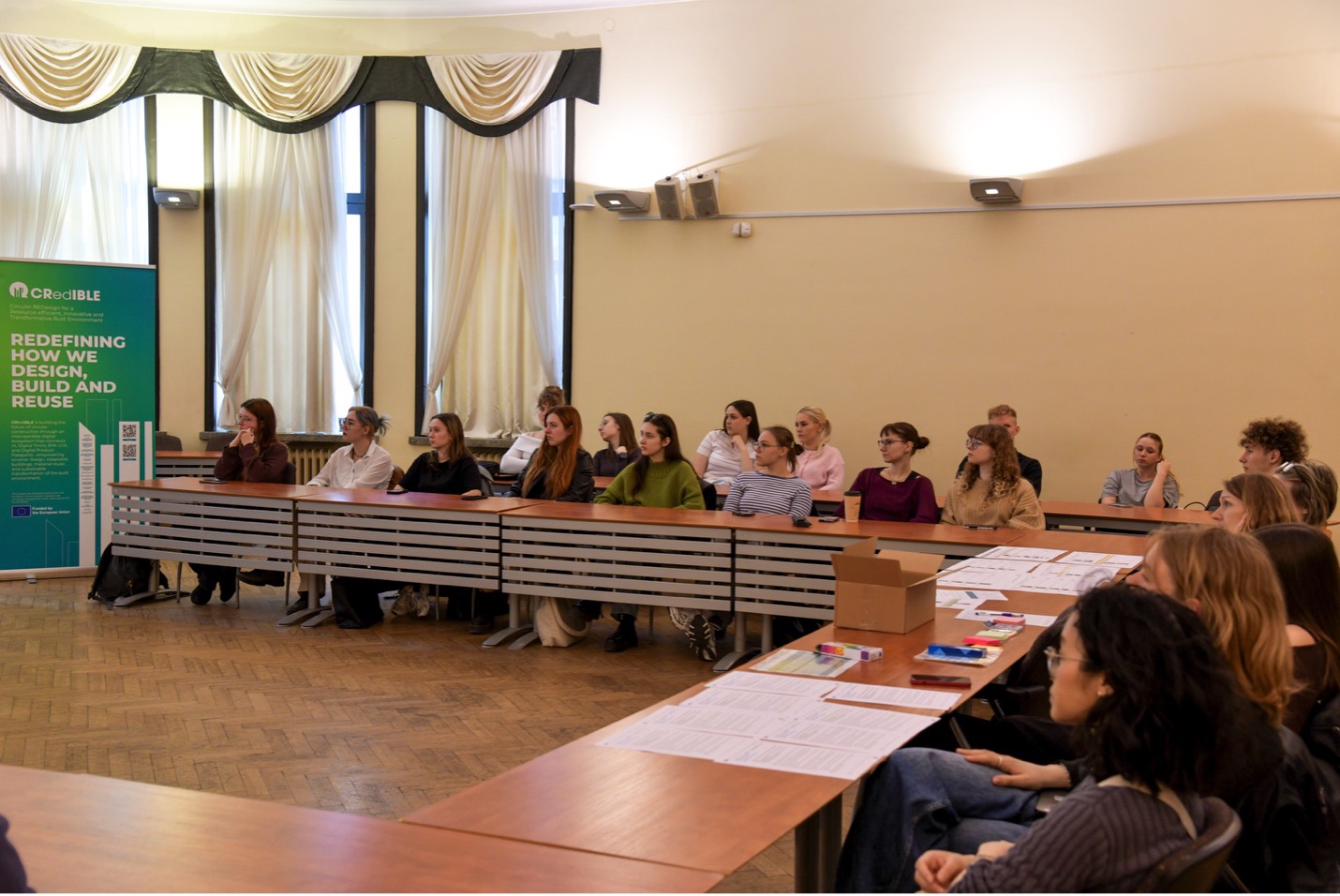
With that foundation in place, the 44 attendees divided into working groups of four to five, using six differently colored post-it notes to respond to six distinct prompts. Collective visions across architectural, social, and sustainability themes revealed a student body deeply attuned to both the weight of history and the urgency of change.
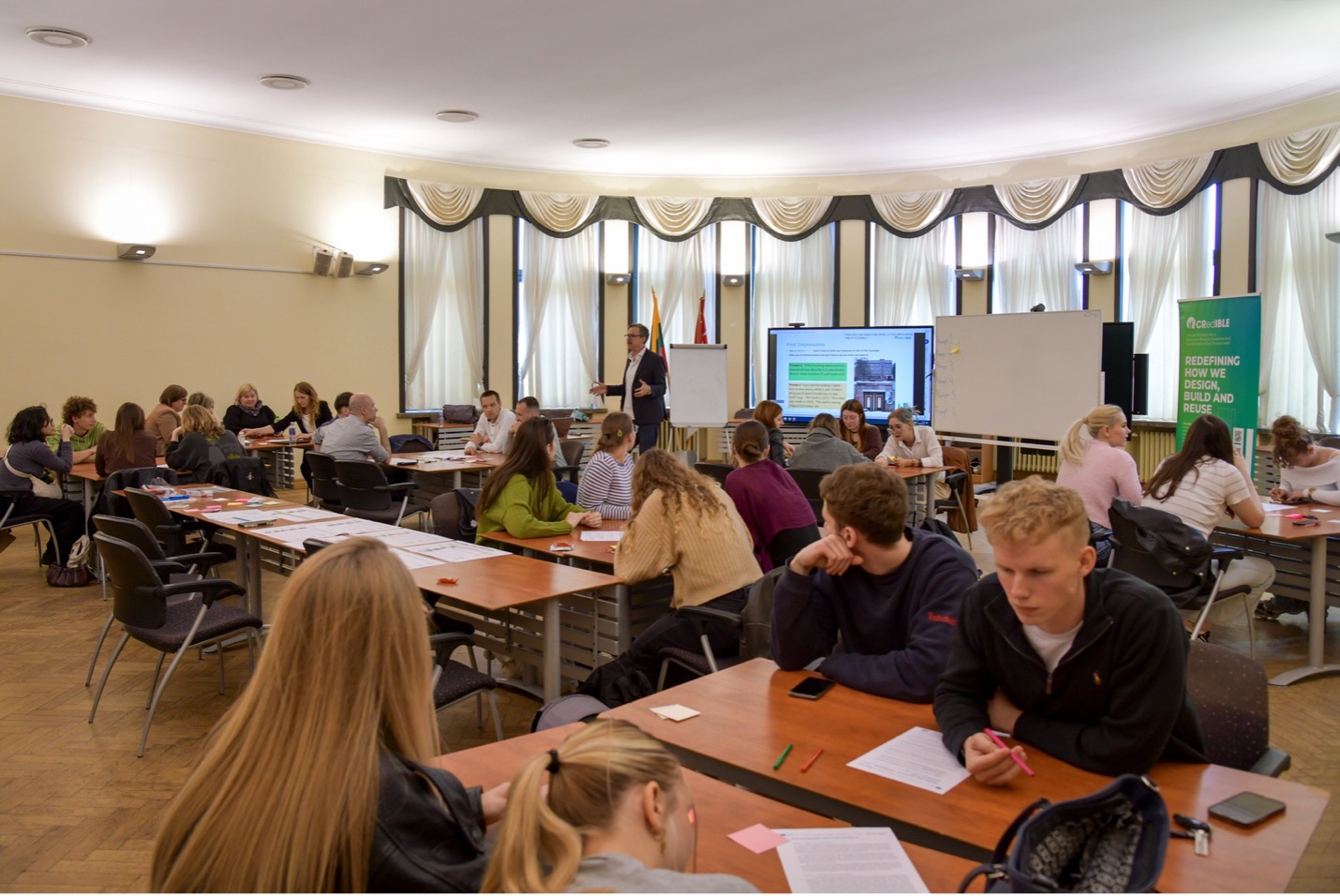
Asked to describe the building as a person (Prompt 1), responses captured its dual character: a dignified institution on the cusp of reinvention. Wuebben's admission that, despite extensive research, he had never located the building's vault piqued students' interest and may have inadvertently sidetracked answers to Prompt 2 about the digital twin, as numerous students said the one thing they would want their digital twin app to reveal was "a map showing the closest route to the vault" and real-time information about "what's in the vault?" Others took a more pragmatic view, explaining the Digital Twin might serve to tell them: "What activities take place in each room: when, where, how many people?"
On heritage preservation (Prompt 3), the clear answer was the four monolithic terrazzo staircases, with their metal ornamented railings and terrazzo flooring. These were identified as the unanimous must-save features, showing "how advanced Lithuania was even 100 years ago."
Prompt 4 invited students to imagine the building as an extension of Unity Square, serving KTU's nearly 40,000 students alongside the city's 21.8% senior population. Responses envisioned the building extending its life beyond office hours: "When the university closes, the building comes alive" as an evening cultural center woven into the city's fabric, with community workshops, flexible meeting spaces, and a student gym.
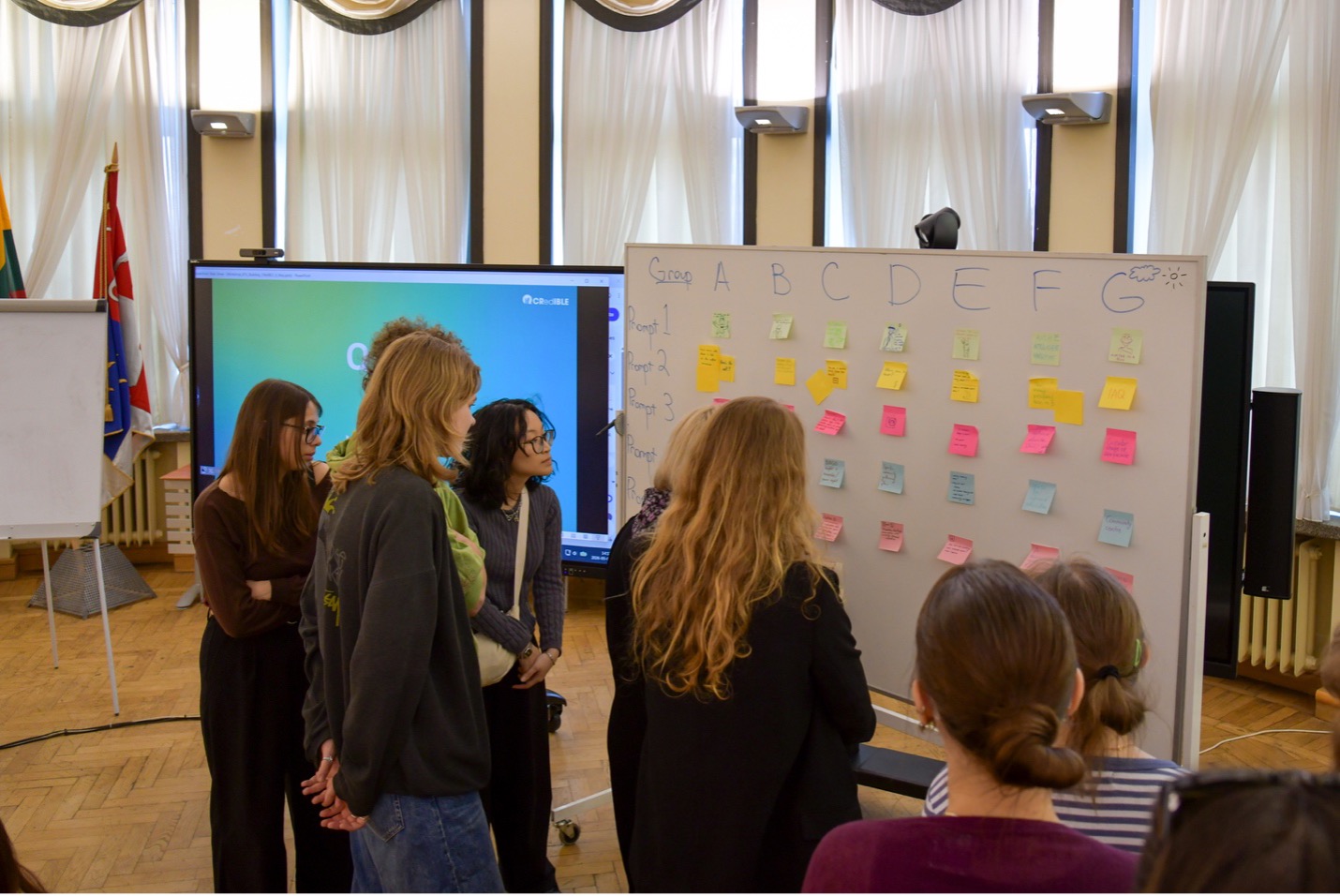
The sharpest discussion came around Prompt 5, where opinions split evenly between Option A (Living Lab, prioritizing reversibility and heritage-compatible demonstration spaces) and Option B (Inclusive Hub, prioritizing physical transformation and community accessibility). Those favoring A felt it was "more related to KTU" and argued that "Option B required too much transformation." Those choosing B pushed back: "We need the building to be more accessible, both physically and for the community." One student reframed the debate entirely: "Maybe change is the true sustainability?" Prompt 6 invited groups to pitch an Option C with original slogans and new features for a Central Building renovation in 2030, producing a creative range of visions that will inform the project's next design phase.
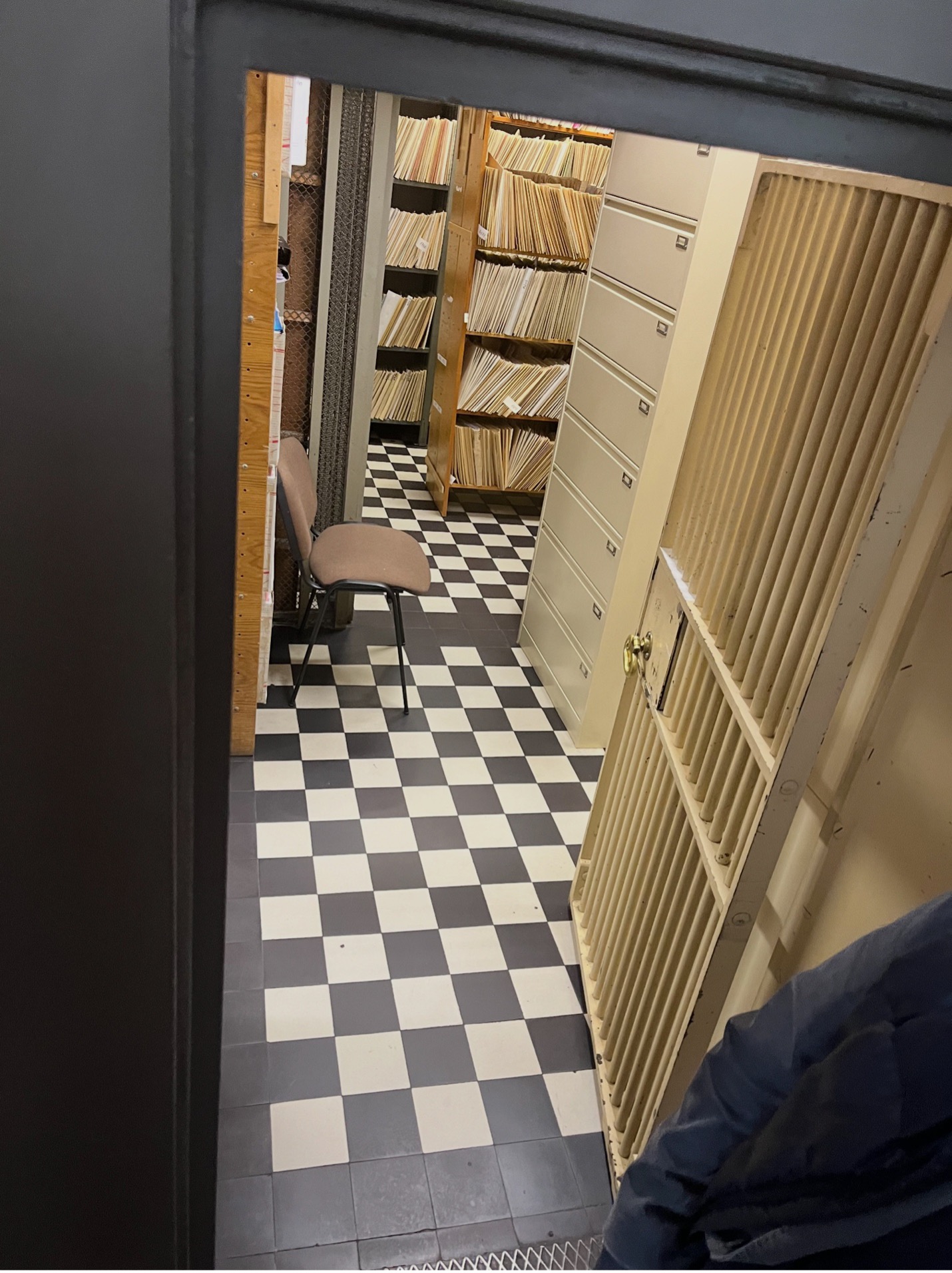
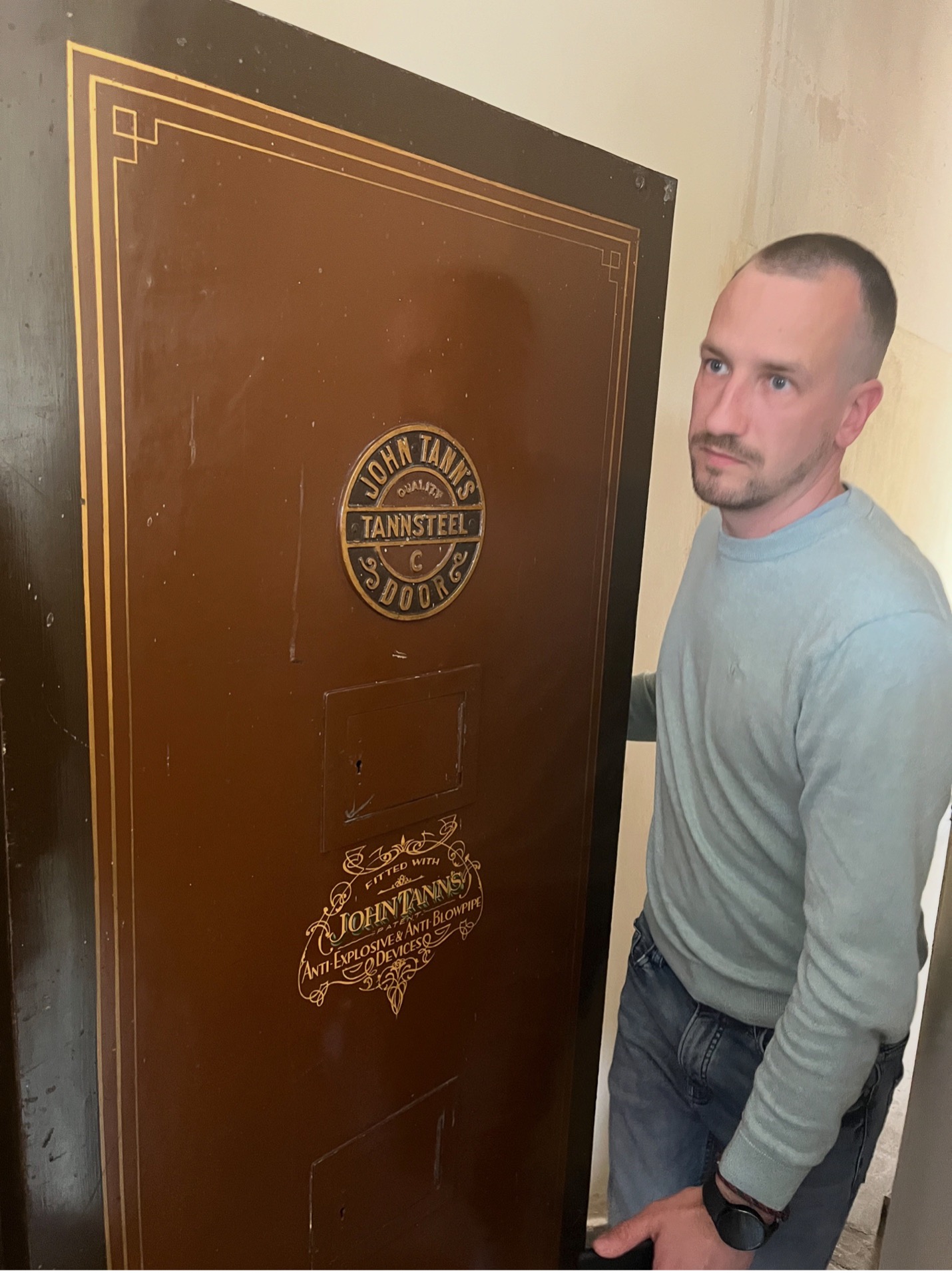
The workshop closed with an unexpected side trip. In attendance was the building manager, who knew about the location of the vault, which required passing through a working office. He asked if we could quietly pass through for a quick peek, and a private tour of the vault, now used to store records, made for an enticing end to the session.
As one student reflected, the day offered a rare chance to "learn in an architecturally important environment" and, it turned out, to discover its secrets firsthand. The behavioral insights and design concepts gathered will feed directly into CRedIBlE's tools, helping ensure that any potential circular renovation of this site at the center of Kaunas' architectural heritage is socially inclusive and environmentally sustainable.