
CRedIBlE joins the Built4People ecosystem: positioning circular digital innovation at the heart of Europe’s construction transition
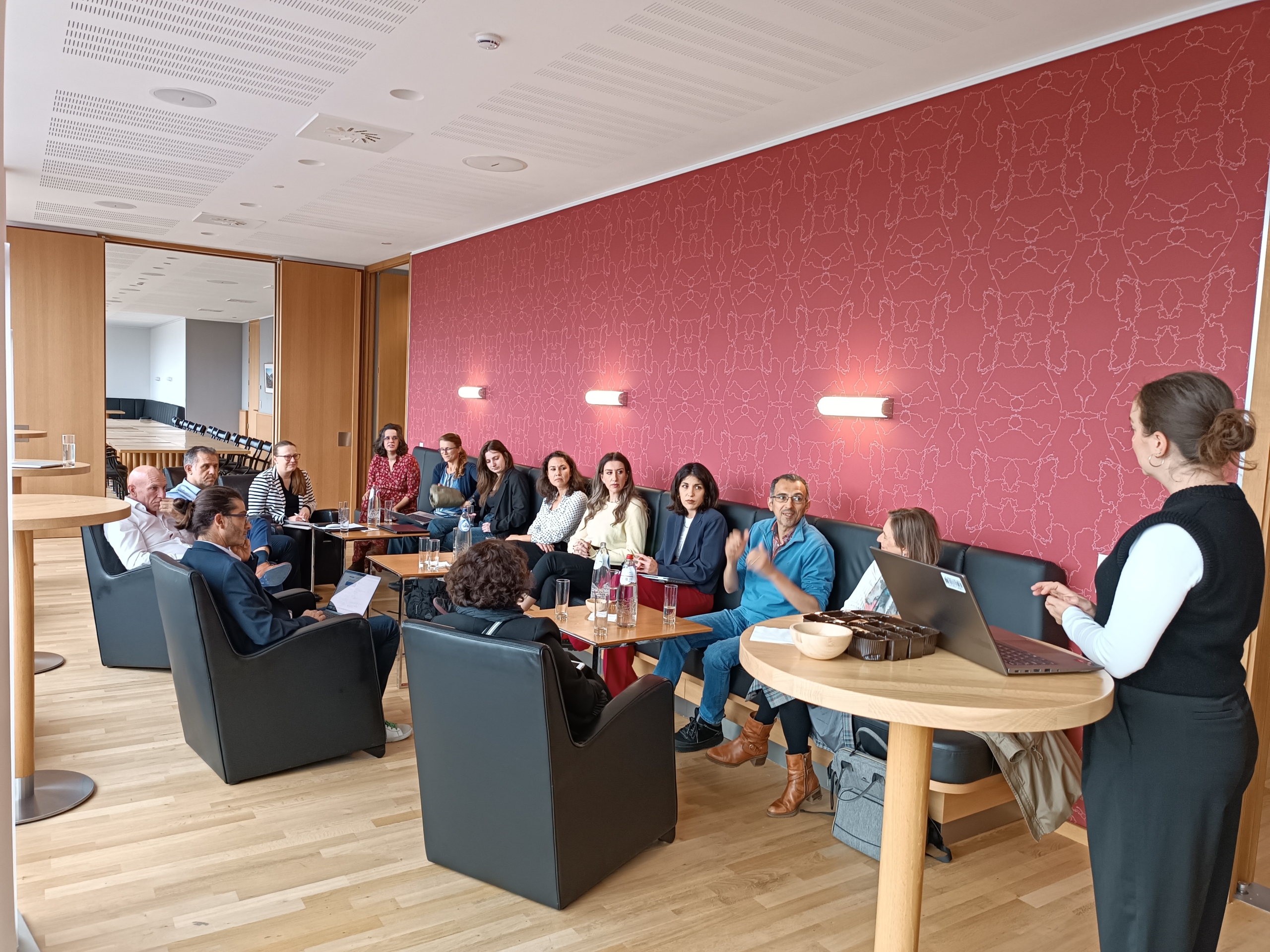
Only a few weeks after its official launch under Horizon Europe, the CRedIBlE project initiative took an important first step onto the European stage. The project was presented during the Built4People Clustering Event in Brussels, a strategic gathering bringing together EU-funded projects, industry representatives, researchers, and public actors working on the future of construction and renovation in Europe.
This early participation was not incidental. It reflects CRedIBlE’s ambition to position itself from the outset as an active contributor to the European dialogue on circular construction, digitalisation, and sustainable transformation of the built environment.
Built4People: a strategic ecosystem for transformation
Built4People (B4P) is more than an event series or a communication platform. It is a contractual public–private partnership under Horizon Europe, designed to align research, innovation, and market uptake around a shared objective: creating a sustainable, resilient, people-centred built environment in Europe.
By fostering collaboration between EU-funded projects, industry leaders, policymakers, and cities, B4P plays a structuring role in:
- accelerating the translation of research into deployable solutions,
- identifying regulatory and standardisation gaps,
- encouraging interoperability and convergence across initiatives,
- and ensuring that technological innovation responds to societal needs.
Clustering events are a key instrument in this strategy. They provide a space where projects can present their approaches, identify complementarities, and collectively reflect on how individual innovations fit into a coherent European transition pathway.
For a newly launched project like CRedIBlE, being part of this dialogue at such an early stage is both a recognition and a responsibility.
Presenting CRedIBlE: circularity powered by digital intelligence
During the event, CRedIBlE was presented by Paris Fokaides (Euphyia Tech LTD), highlighting the project’s core vision: enabling circular construction and renovation through a fully interoperable digital ecosystem.
At the heart of CRedIBlE lies a simple but transformative premise. Europe’s building stock will not become sustainable by demolition and replacement alone. Circularity requires the capacity to understand existing buildings in depth, to assess their potential for adaptation and reuse, and to make informed decisions that balance environmental performance, cost, regulatory constraints, and social value.
To achieve this, CRedIBlE brings together a suite of advanced digital and material innovations, including:
- AI-driven decision-support systems to guide renovation and reuse strategies,
- Digital Product Passports to ensure traceability of materials and components,
- integrated BIM–LCA–Digital Twin workflows for lifecycle-based assessment,
- predictive analytics to support reuse, deconstruction, and phased renovation,
- and a marketplace concept facilitating the circulation of secondary construction materials.
Rather than developing these elements in isolation, the project focuses on interoperability, ensuring that data can flow across tools, stakeholders, and lifecycle stages.
From linear to circular: aligning with the European agenda
The discussions at the Built4People event reinforced how closely CRedIBlE aligns with current European priorities. Across Horizon Europe, the shift away from linear construction models is increasingly framed as a systemic challenge rather than a technical one.
Circularity is not only about recycling materials at the end of life. It is about designing buildings that can evolve, adapt, and be repurposed over decades. This requires digital continuity, robust data governance, and tools capable of supporting long-term decision-making under uncertainty.
CRedIBlE directly addresses these challenges by:
- focusing on adaptive reuse rather than greenfield construction,
- embedding circularity indicators into early design and renovation decisions,
- linking physical materials with digital representations and passports,
- and testing solutions in real pilot sites with diverse regulatory and social contexts.
This approach resonates strongly with the Built4People vision of a built environment that is not only climate-neutral, but also inclusive, economically viable, and responsive to people’s needs.
Why early engagement with Built4People matters
Participation in the Built4People Clustering Event so early in the project lifecycle carries strategic significance.
First, it positions CRedIBlE within a community of practice. By engaging alongside other Horizon Europe projects, the consortium gains early visibility into parallel developments, avoiding duplication and opening opportunities for collaboration.
Second, it supports alignment with policy and standardisation processes. Built4People acts as a bridge between research projects and European institutions, helping to ensure that emerging solutions are compatible with evolving regulatory frameworks and future market expectations.
Third, it reinforces credibility. For stakeholders beyond the consortium—cities, industry partners, investors—early inclusion in high-level European discussions signals that CRedIBlE is designed with impact and scalability in mind, not as a closed research exercise.
Finally, it strengthens dissemination and exploitation pathways. Visibility within the B4P ecosystem facilitates knowledge exchange, stakeholder engagement, and long-term uptake of project results beyond the duration of Horizon Europe funding.
Contributing, not just observing
CRedIBlE’s presence at the Built4People event was not limited to showcasing its objectives. It was also an opportunity to listen, to benchmark its approach against broader trends, and to identify areas where the project can actively contribute to collective European efforts.
Key themes emerging from the clustering discussions—such as interoperability, digital trust, lifecycle data governance, and social acceptance of renovation—are already embedded in CRedIBlE’s work plan. This confirms the relevance of the project’s direction while highlighting the importance of continuous dialogue with peers and institutions.
Over the coming years, CRedIBlE aims to remain actively engaged with Built4People activities, contributing evidence from pilot sites, sharing methodological insights, and supporting the convergence of digital and circular construction practices across Europe.
A first step in a long-term dialogue
Seeing CRedIBlE included in the Built4People Clustering Event only weeks after its launch sends a clear message. This project does not intend to remain on the margins of the European construction transition. From day one, it seeks to engage, to contribute, and to help shape the agenda on circular construction and digital traceability.
As CRedIBlE progresses—from design to development, from pilots to deployment—its interaction with the Built4People ecosystem will remain a key channel for amplifying impact, ensuring relevance, and translating innovation into practice.
This early milestone marks the beginning of that dialogue.